
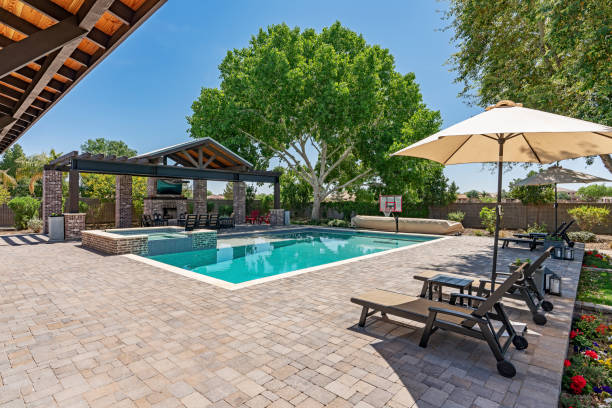
Choosing the best pool deck material is one of the most important decisions when designing or upgrading a swimming pool area. The right material not only enhances the beauty of your outdoor space but also ensures safety, comfort, and long-term durability. Since pool decks are constantly exposed to water, sun, and heavy foot traffic, selecting a material that balances performance and aesthetics is essential.
A well-planned pool deck creates a safe, slip-resistant surface while also improving the overall value of your property. Let’s explore the most popular and effective pool deck materials to help you make the right choice for your home.
1. Concrete Pool Decks
Concrete is one of the most widely used pool deck materials due to its affordability and versatility. It can be poured into various shapes and customized with stamping, coloring, or textured finishes.
Concrete offers a solid surface that holds up well under pressure, making it a practical option for many homeowners. However, it may develop cracks over time due to temperature changes. Despite this, its cost-effectiveness and design flexibility keep it a top choice for many pool areas.
2. Natural Stone Pool Decks
Natural stone is considered a premium choice when looking for the best pool deck material. Materials like travertine, limestone, and flagstone provide a luxurious and timeless appearance.
Stone decks are highly durable and naturally slip-resistant, making them safe for wet environments. They also stay relatively cool under sunlight compared to other materials. However, they are more expensive and require professional installation, which increases the overall cost.
3. Paver Pool Decks
Pavers are another popular option for pool decks because of their strength and design flexibility. They come in different shapes, colors, and textures, allowing homeowners to create customized outdoor designs.
One major advantage of pavers is that individual pieces can be replaced easily if damaged, unlike concrete slabs. They also offer good drainage, reducing water buildup around the pool area. This makes them both functional and visually appealing.
4. Wood and Composite Decking
Wood decking provides a warm and natural look that blends beautifully with outdoor environments. However, it requires regular maintenance such as sealing and staining to protect it from moisture and chlorine damage.
Composite decking, on the other hand, is a low-maintenance alternative made from wood fibers and plastic. It resists fading, rotting, and warping, making it a practical long-term solution for poolside areas.
5. Tile and Modern Coatings
Tiles and modern surface coatings are also used in high-end pool designs. Tiles offer a sleek, polished look and come in various patterns and colors. Slip-resistant finishes are essential for safety.
Coatings like textured overlays can also improve the appearance and safety of existing concrete surfaces, making them cooler and more comfortable to walk on during hot weather.
Choosing the Right Material
When selecting the best pool deck material, consider key factors such as safety, maintenance, budget, and climate. If you want affordability, concrete is a strong choice. For luxury appeal, natural stone stands out. If low maintenance is your priority, composite decking may be ideal.
Each material has its strengths, and the right decision depends on how you use your pool space and the overall design you want to achieve.
Conclusion
Selecting the right pool deck material plays a major role in creating a safe and attractive outdoor environment. Whether you prefer the durability of concrete, the elegance of stone, or the convenience of modern composites, your choice should match both your lifestyle and budget. For professional installation and high-quality craftsmanship, puppaversinc can help transform your pool area into a stylish and functional outdoor retreat.