
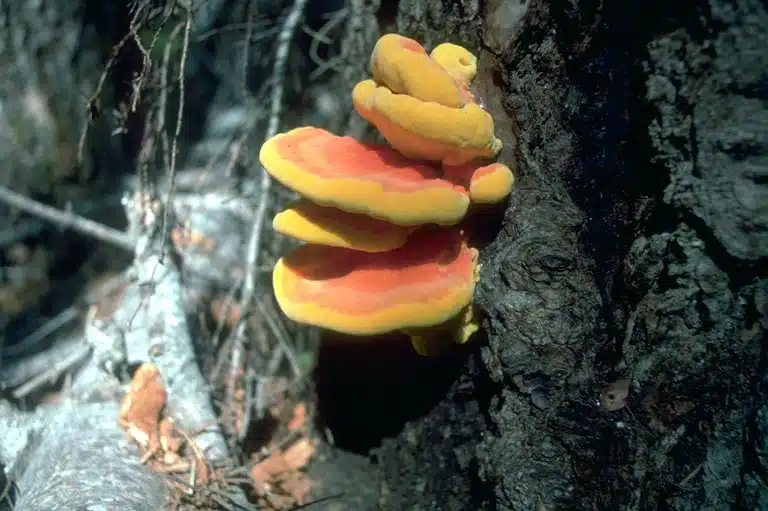
The appearance of tree mushrooms around or on trees often raises concern for homeowners and property managers. These fungal growths are not just random occurrences—they are part of a natural decomposition process that can reveal important information about the health of a tree. While some mushrooms are harmless, others may indicate internal decay or structural weakness within the tree.
Tree mushrooms are the visible fruiting bodies of fungi that live beneath the surface in a network called mycelium. According to tree health research, these fungi grow when environmental conditions such as moisture, decaying wood, and shade are present.
Understanding what these mushrooms indicate is essential for maintaining safe and healthy trees on your property.
Why Tree Mushrooms Grow
Tree mushrooms typically develop due to the presence of organic material that fungi feed on. Trees naturally contain cellulose and lignin, which become food sources for fungi when the tree begins to weaken or die in parts.
Fungi spread through microscopic spores carried by wind, water, or insects. Once these spores land on a suitable host—such as a damaged tree trunk or root system—they begin forming an underground network. Over time, this network produces visible mushrooms.
Common reasons tree mushrooms appear include:
- Excess moisture in soil
- Poor drainage around tree roots
- Physical damage to bark or roots
- Aging or stressed trees
- Decaying wood inside the trunk or roots
While mushrooms may sometimes grow on healthy soil without harming trees, their presence on or near a trunk often suggests internal decay.
Are Tree Mushrooms Always Dangerous?
Not all tree mushrooms are harmful. In fact, many fungi play a beneficial ecological role by breaking down dead organic matter and returning nutrients to the soil. These types of mushrooms help maintain soil health and ecosystem balance.
However, mushrooms growing directly on a tree or at its base can be a warning sign. They may indicate that:
- The tree has internal rot
- The root system is weakened
- Structural stability is compromised
When decay fungi colonize a tree, they break down the wood from the inside, sometimes without visible symptoms until the damage becomes severe.
This is why arborists often treat mushroom growth as a potential early indicator of tree health issues.
Types of Tree Mushrooms You Might See
Different types of mushrooms can appear on or around trees, and each may indicate a different condition:
1. Shelf or bracket fungi
These grow in layered formations on trunks or branches and often signal long-term decay.
2. Honey fungus-type mushrooms
Usually found at the base of trees, these can be associated with root rot and structural weakening.
3. Soft cap mushrooms
Often found in soil near trees, these are generally harmless decomposers.
4. Bright-colored mushrooms (like orange or yellow clusters)
These may indicate heart rot inside the tree trunk.
Correct identification is important because some mushrooms are harmless recyclers, while others are aggressive parasites.
How Tree Mushrooms Affect Tree Health
When harmful fungi infect a tree, they feed on the internal wood structure. This process weakens the tree from the inside out, reducing its ability to transport water and nutrients.
Over time, this can lead to:
- Hollow trunks
- Weak branches prone to breaking
- Root decay
- Tree instability during storms
In severe cases, infected trees may become hazardous and require removal to prevent property damage or safety risks.
Can Tree Mushrooms Be Treated?
Once fungi have deeply colonized a tree, it is often difficult to reverse the damage. However, early detection can help manage the situation.
Tree care professionals may recommend:
- Removing infected branches
- Improving soil drainage
- Reducing excess moisture around roots
- Preventing further wounds to the tree
- Monitoring structural stability regularly
If decay is advanced, removal may be the safest option to avoid unexpected tree failure.
Preventing Tree Mushroom Growth
Prevention is always better than treatment. To reduce the chances of mushroom growth on your trees, consider the following practices:
- Avoid overwatering and ensure proper drainage
- Do not damage roots or bark with lawn equipment
- Maintain regular tree pruning and inspection
- Remove dead wood and organic debris near tree bases
- Improve soil aeration in compacted areas
Healthy trees with strong natural defenses are less likely to develop fungal infections.
Final Thoughts
Tree mushrooms are more than just a natural forest feature—they can be an important indicator of tree health. While some mushrooms are harmless and part of nature’s recycling system, others signal internal decay that may compromise tree safety.
Regular observation and professional evaluation are key to ensuring trees remain strong, stable, and safe over time. If you notice unusual mushroom growth around your trees, it is always best to seek expert advice.